
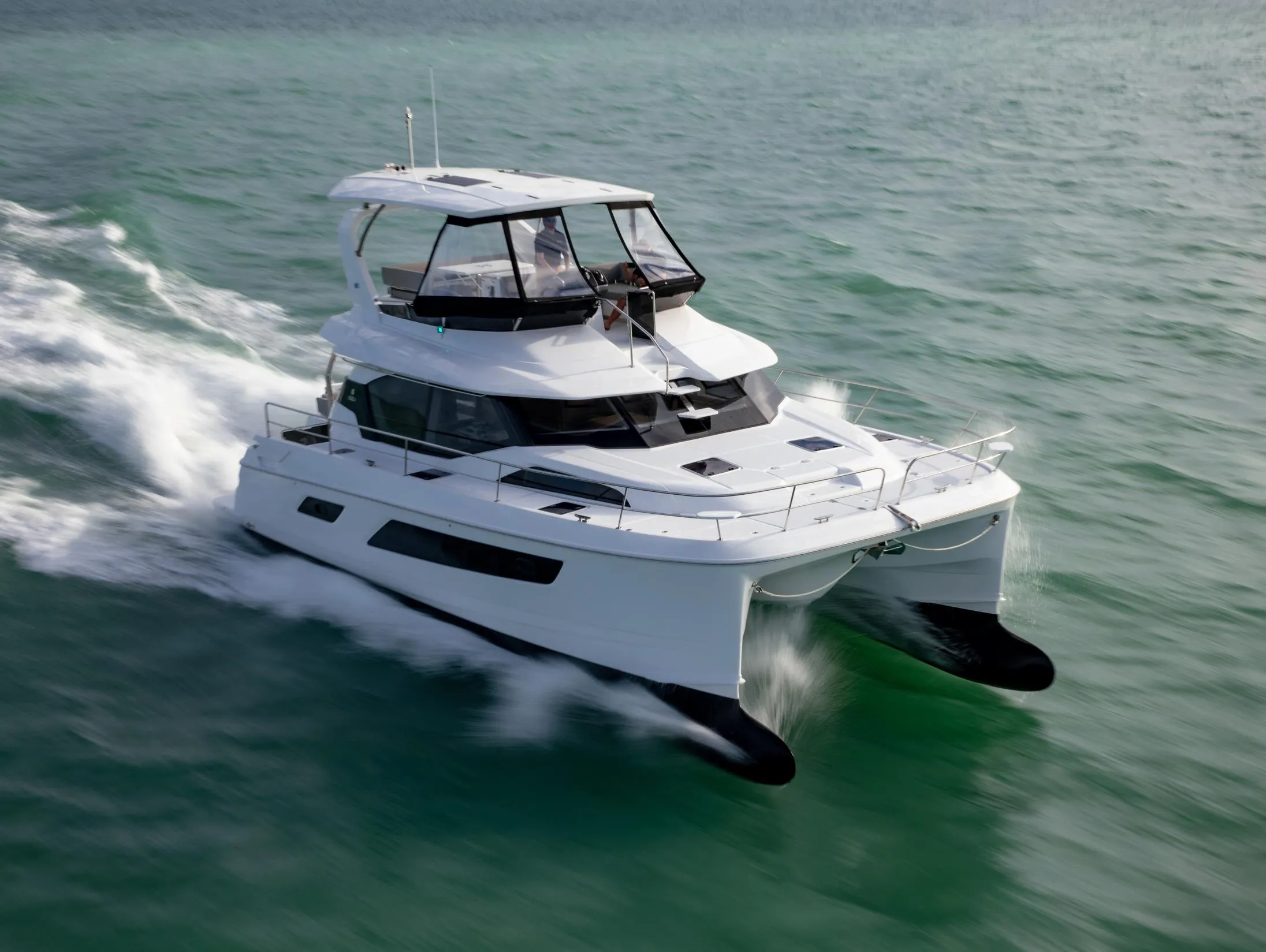
In modern boating, few hydrodynamic solutions have proved as effective as the bow bulb.
The Aquila 54 Power Catamaran, one of today’s jewels in the luxury boat market, uses precisely engineered bow bulbs to improve stability, comfort and efficiency.
But the history of this prominent naval feature goes back much further than you might think.
A journey to the origins: the first engineers of the sea
Long before concepts such as wave resistance, energy efficiency or computational fluid dynamics existed, the peoples of the Mediterranean were already experimenting with advanced bow shapes on their ships.
Phoenicians: the pioneers (900–800 BC)
The Phoenicians, famous traders and seafarers, were the first to add a protruding element to the bow: the ram. Made of bronze, it projected below the waterline and had a purely tactical purpose: to strike and pierce enemy hulls. Without knowing it, they were shaping the first structural precedent for forward protrusions on naval hulls.
Greeks: perfecting the design (700–400 BC)
The Greek navy turned the ram into a decisive weapon. Their triremes carried a three-pronged ram that combined effectiveness with technical refinement. Its pointed shape, its position and the internal reinforcement of the bow were advances that, unintentionally, explored how a forward mass changed the interaction between hull and water.
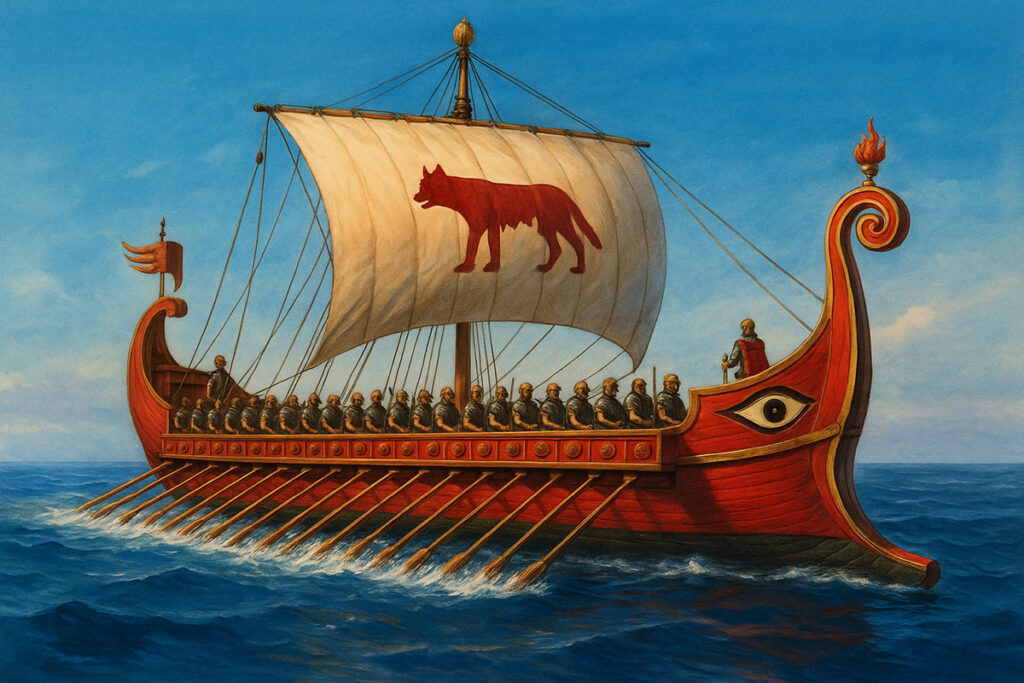
Romans: engineering and standardisation (300 BC–100 AD)
Rome inherited and refined the Mediterranean ram design.
Although its purpose remained military, Roman naval engineering introduced features that would echo centuries later in modern hydrodynamics:
- Internal reinforcements,
- Empirical studies of impact,
- Changes to the shape to control the flow below the waterline.
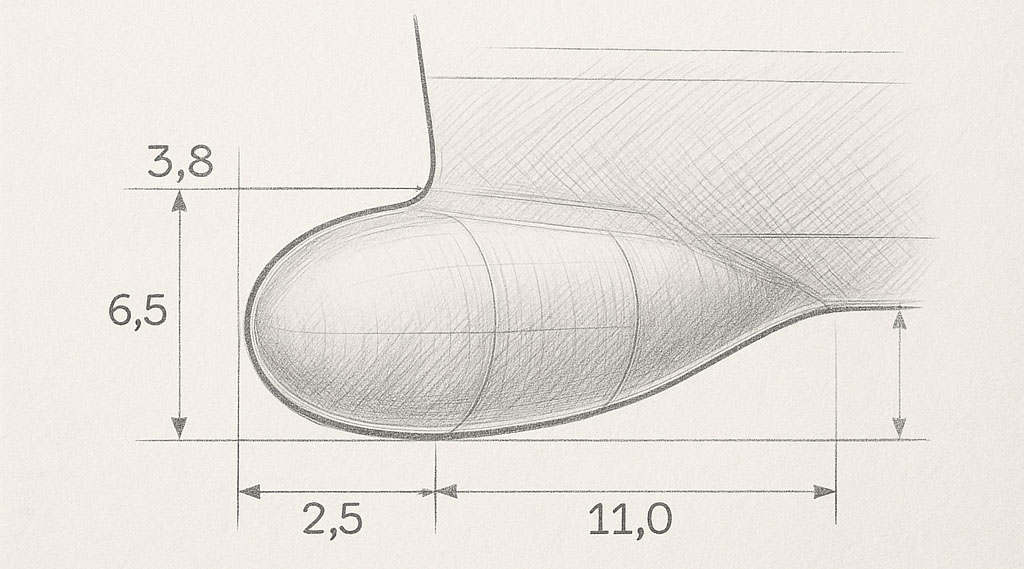
Ram vs. bulb: different purposes, related principles
It is important to be clear that the ancient ram and the modern bow bulb do not share the same function:
- The first was an offensive weapon.
- The second is a hydrodynamic solution for efficiency and comfort.
Even so, there is a conceptual bridge between the two technologies:
Both reflect the human intuition that changing the geometry of the bow radically changes how a boat behaves in the water.
Where the ancients sought to pierce an enemy hull, modern engineers seek to pierce the bow wave to reduce resistance.
In both cases, the key was understanding how a prominent mass below the surface could transform energy into motion.
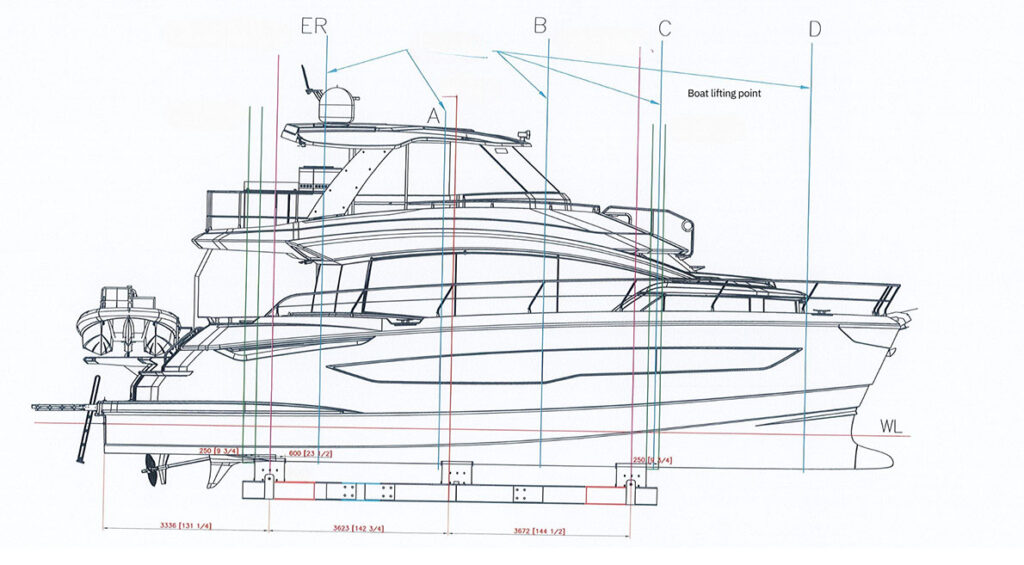
The birth of the modern bow bulb
The real origin of the bow bulb came in the 19th century, when scientists such as William Froude laid the foundations of experimental hydrodynamics. His work explained how the waves generated by a hull could interfere with one another.
In the early 20th century, engineers such as David W. Taylor in the United States and Tokujiro Watanabe in Japan turned theory into practice.
They found that a forward volume below the waterline could:
- Reduce the bow wave,
- Improve fuel efficiency,
- Increase stability in rough seas,
- Soften pitching (hobby horsing).
From the 1930s the bulb became standard on merchant ships and warships and, more recently, on high-performance leisure boats.
The bow bulb on the Aquila 54 Power Catamaran
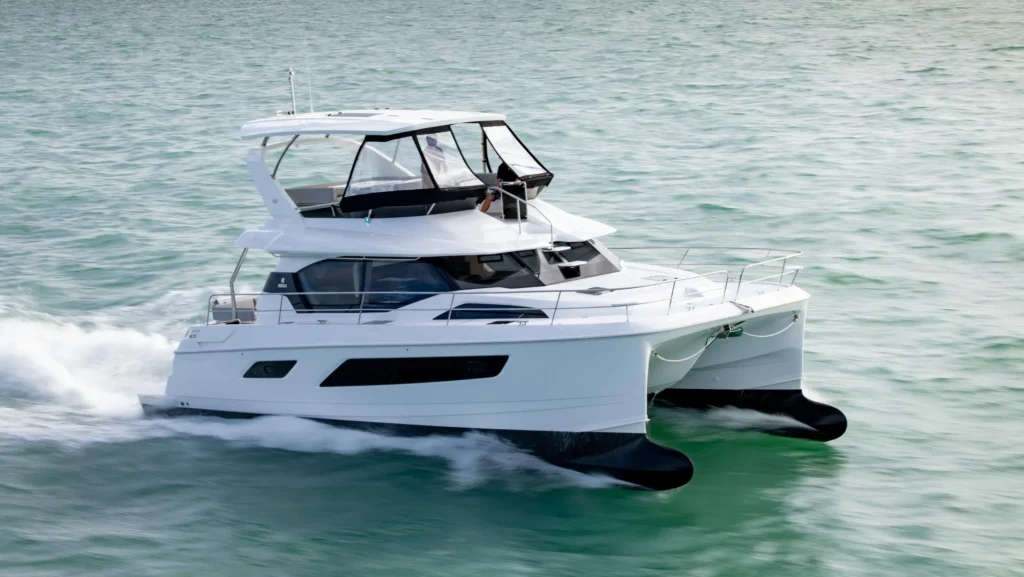
The Aquila 54 Power Catamaran has carefully optimised bow bulbs that reflect more than 3,000 years of naval evolution.
What do these bulbs bring to the Aquila 54?
- Greater stability in rough seas: the bulbs help reduce pitching for a smoother ride, especially welcome on a catamaran of this length.
- Superior hydrodynamic efficiency: the shape of the bulb minimises frontal resistance and contributes to better fuel economy, a key factor on long passages.
- Better behaviour at cruising speed: the Aquila 54 does not just cruise efficiently; thanks to its bulbs it does so with more comfort for passengers and less strain on its engines.
- Optimised water flow on a multihull: on a catamaran, the design of the forward sections is fundamental. The Aquila 54’s bulbs are designed to create a more predictable and stable water entry between the two hulls.
The culmination of an ancient legacy
What began as a Phoenician ram designed for combat has evolved into a sophisticated tool for efficiency.
Today, the bow bulb on the Aquila 54 Power Catamaran is a symbol of a long line of naval innovations that unite ancient ingenuity with modern technology.
The sea is still the same; what changes is the way we navigate it.
And the Aquila 54 is a brilliant reminder of how far naval engineering can go when it combines history, science and a passion for design.

